
As a U.S. business owner, you’re facing a critical decision that affects your bottom line and your team’s future financial security. With state-facilitated auto-IRA mandates rolling out across the country, many employers are asking: should we stick with the state program or invest in a traditional 401(k)?
This isn’t just another compliance checkbox. The plan you choose affects satisfaction, recruiting, and your company’s obligations for years. Let’s break down both options so you can make the right call for your business.
Understanding State Auto-IRA Programs: The Basics
Many states now offer auto-IRA programs (often called “state-facilitated retirement” or “Secure Choice”). If your business meets your state’s size or tenure threshold and you don’t offer a qualified plan, you’re typically required to facilitate the program.
Here’s how it usually works: Employees are automatically enrolled in Roth IRA accounts, often at a default rate. Contributions commonly auto-escalate by a percentage each year until a cap. Employees can change their rate, pause contributions, or opt out at any time.
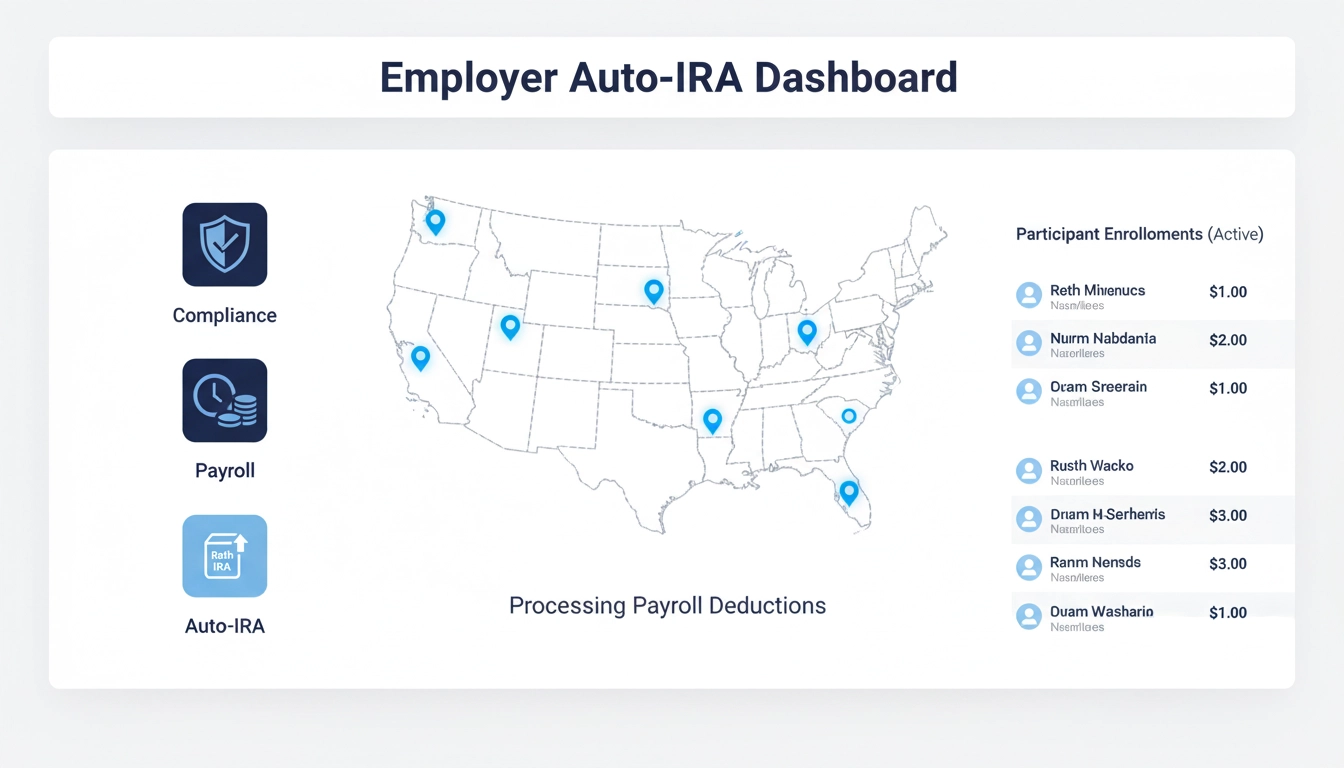
States oversee these programs through designated administrators. For employers, the workload stays light: add payroll deductions and remit contributions. No setup fees, no administration costs, no ERISA compliance.
But here’s the catch: employer contributions aren’t allowed under state auto-IRA programs. You can’t offer a match or profit share within these accounts.
Traditional 401(k) Plans: Maximum Flexibility
A traditional 401(k) plan puts you in the driver’s seat. You design the plan, choose the investment options, set contribution limits, and decide whether to offer employer matching contributions. Employees typically make pre-tax contributions, which reduces their current taxable income.
With a 401(k), you have the flexibility to create a competitive benefits package that can help attract and retain top talent. Many employers use matching contributions as a powerful recruitment tool – and for good reason. It’s essentially free money that demonstrates your commitment to employees’ long-term financial success.
However, this flexibility comes with responsibility. You’ll need to handle plan setup, ongoing administration, compliance with federal regulations, and integration with your payroll system. These responsibilities often require professional help, which means additional costs.
Side-by-Side Comparison
Let’s see how these options stack up on what matters most to business owners:
Cost Structure
State auto-IRAs win on upfront cost — they’re free to implement and maintain. Traditional 401(k)s can include setup fees, annual administration, and any employer match. For a small business, these can total thousands per year without credits.
Administrative Burden
State auto-IRAs take minimal effort. Set up payroll deductions and the program handles the rest. 401(k)s require more: compliance testing, employee education, annual filings, and plan management.
Employee Benefits
This is where 401(k)s shine. Employer matching can materially boost savings. A common match is 50% of employee contributions up to 6% of pay — often worth thousands per employee per year.

Tax Advantages
State auto-IRAs generally use Roth IRAs. Contributions are after-tax; qualified withdrawals in retirement are tax-free. 401(k) contributions reduce current taxable income, creating immediate tax relief. For higher earners who expect a lower bracket later, the pre-tax 401(k) advantage can be significant.
Investment Options
State auto-IRAs offer limited menus, often target-date funds and a capital preservation option. 401(k)s can provide broader lineups across asset classes, risk levels, and styles.
When a State Auto-IRA Makes Sense
A state auto-IRA is ideal if you want to support employee saving without the cost and complexity of a traditional retirement plan. Consider a state auto-IRA if your business:
- Runs on tight margins where every dollar counts
- Lacks dedicated HR staff to manage benefits
- Employs workers who value simple, automatic enrollment
- Prefers the state program to handle compliance and administration
- Can’t commit to ongoing employer matching contributions
Small businesses, startups, and companies with higher turnover often find state auto-IRAs deliver access to saving without adding financial or administrative burden.
When a 401(k) Plan Is Worth the Investment
Despite the higher costs and complexity, a 401(k) plan can be a smart business investment. Consider implementing a traditional 401(k) if your business:
- Competes for talent in industries where retirement benefits are expected
- Has the resources to handle plan administration or hire professionals
- Wants to use employer matching as a recruitment and retention tool
- Employs higher-income workers who would benefit from pre-tax contributions
- Seeks to differentiate itself from competitors through superior benefits
Professional services firms, established businesses with stable workforces, and companies in competitive hiring markets often find that 401(k) plans pay for themselves through improved employee satisfaction and reduced turnover.
The Hybrid Approach: Can You Have Both?
Here’s something many business owners don’t realize: establishing a 401(k) plan typically exempts you from state auto-IRA mandates. You could start with a state auto-IRA to meet compliance now, then transition to a 401(k) as your resources grow.
Some employers even maintain both options, though it requires careful coordination so employees understand their choices and avoid conflicts.
How CYTO Helps You Implement Retirement Plans at Zero Employer Cost
The number-one worry we hear is, “Won’t this get expensive?” It doesn’t have to. CYTO helps partners roll out retirement plans nationwide with no employer out-of-pocket costs for setup or administration (excluding any optional 401(k) match).
What this can look like:
- $0 employer cost for 401(k) rollout: We handle registration, employee communications, and payroll mapping so your team doesn’t have to.
- Payroll integrations: We connect with leading payrolls to automate deductions, remittances, and ongoing sync.
- Employee onboarding and education: Plug-and-play email kits, webinars, and office hours to drive adoption and reduce HR time.
- Compliance and notices: We manage required notices, eligibility workflows, and annual tasks to keep you on track.
- Reporting you can act on: Participation, savings rates, and opt-out insights so you can make quick improvements.
Why this often works: providers want scale, and the SECURE Act offers tax credits for new 401(k) plans that can offset setup and admin costs for eligible small employers. We package these advantages to minimize your spend.
Would it help if your team didn’t have to manage the setup or the day-to-day? If we could show you a $0 employer-cost path (excluding any match), would you want to see how that could work for your people?
Schedule a 15-minute consult to review your options and a clear $0-cost rollout plan.
Making Your Decision
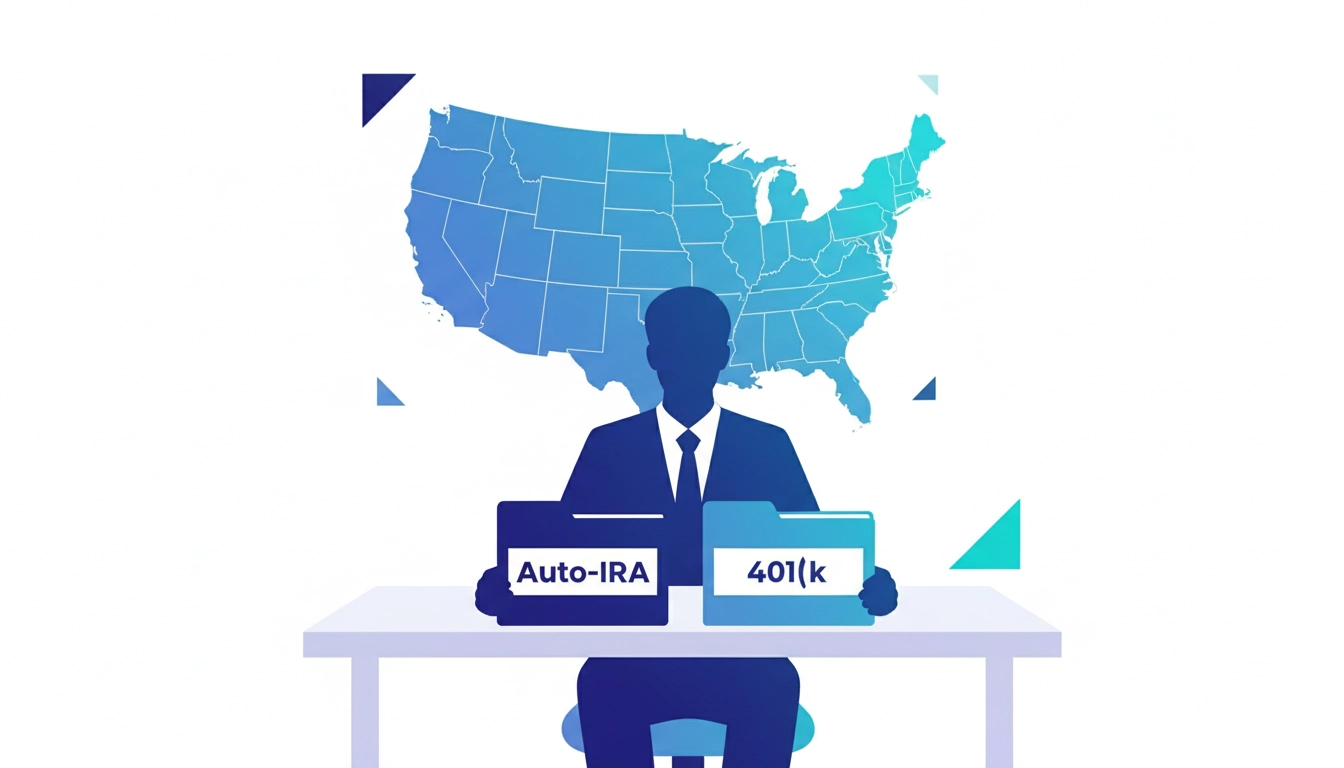
The choice between a state auto-IRA and a traditional 401(k) ultimately comes down to your priorities, resources, and growth trajectory.
If you’re focused on compliance with minimal cost and complexity, a state auto-IRA provides exactly what you need. Your employees get access to retirement savings, you meet state requirements, and you can keep resources focused on growth.

If you’re building a comprehensive benefits package to attract and retain talent, a traditional 401(k) with employer matching can be a powerful tool. Yes, it costs more and needs more management, but it can deliver real value in satisfaction and retention.
Next Steps for Your Business
Don’t wait until the last minute. Whether you choose a state auto-IRA or implement a 401(k), planning now ensures a smooth transition for you and your team.
Start by evaluating your workforce, budget constraints, and goals. Consider consulting with a benefits advisor who can help you analyze total cost of ownership for each option, including hidden costs like turnover that better benefits can help reduce.
Remember, the “right” choice isn’t always the cheapest up front. Investing in benefits can pay off through retention, productivity, and reputation.
The retirement landscape is changing, and state-facilitated programs reflect many states’ commitment to expanding access to retirement savings. Whether you embrace the simplicity of a state auto-IRA or the flexibility of a traditional 401(k), you’re supporting your employees’ financial futures while positioning your business for long-term success.
The decision you make today will impact your business and your employees for years. Choose wisely, and reach out if you’d like help mapping the best path for your situation.